From Spotlight to Stillness — What the Stage Taught Me About the Nervous System
By Brian Lorenz
Long before I discovered breathwork, I was learning about the nervous system.
I just didn't know that's what I was learning.
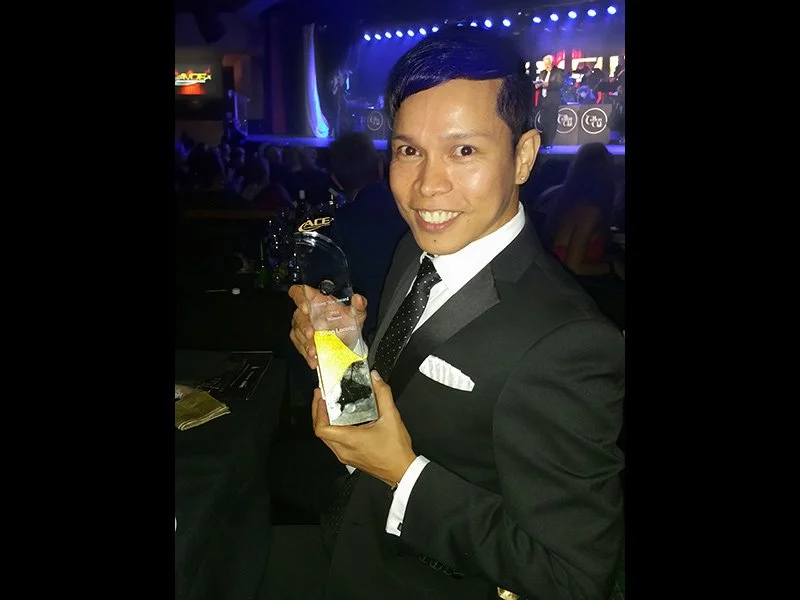
For over two decades, I earned my living performing. Some nights it was in front of a few dozen people, other times hundreds. Every event was different. Every audience had its own energy. Every performance carried the same expectation—to show up, be present and deliver, regardless of how I felt.
People often imagine that performing becomes easier with experience. In many ways, it does. You become more prepared. You trust your craft. You know how to read a room and adapt to what's unfolding in front of you.
But something else happens too.
You become incredibly aware of what's happening inside your own body.
There were moments before walking on stage when my heart would race. My breathing would become shallower. My senses seemed sharper. Every sound felt louder. Every thought moved a little faster.
At the time, I simply called it nerves.
Today, I understand that my body was doing exactly what it was designed to do.
It was preparing me for something important.
Our nervous system doesn't distinguish between stepping onto a stage and stepping into any other situation it perceives as significant or uncertain. A presentation at work. A difficult conversation. Walking into a crowded room where you don't know anyone. Speaking up for yourself after years of staying quiet.
To the body, uncertainty can feel remarkably similar.
Looking back, I realise I spent years trying to manage those sensations without fully understanding them.
Sometimes I would pace backstage.
Sometimes I'd become unusually quiet.
Sometimes I'd focus intensely on the opening moments of the performance because I knew that once I found my rhythm, everything else would settle.
Without realising it, I was searching for regulation.
It wasn't until years later, through studying breathwork and working with people experiencing anxiety, that many of those experiences began to make sense.
I discovered that our breathing is closely connected to the way we experience stress. When we're anxious, breathing often becomes rapid and shallow. The body prepares for action, even when no physical danger exists. It's an incredibly intelligent survival response, but it isn't always helpful in modern life.
The fascinating part is that the relationship works both ways.
Just as anxiety can influence our breathing, changing the way we breathe can help influence how we feel.
That doesn't mean taking one deep breath magically removes anxiety.
Life is rarely that simple.
But learning to breathe more intentionally can become one of the ways we signal to ourselves that we're safe enough to slow down, think clearly and reconnect with the present moment.
I've experienced that transition countless times.
The moments before stepping onto a stage were often filled with anticipation. The first few breaths after the opening song—or the first few words as an MC—were different. Something shifted. My attention moved away from myself and towards the audience.
The spotlight remained exactly the same.
What changed was my internal state.
I've come to believe that many people spend their lives living in those few minutes before walking on stage.
Always preparing.
Always anticipating.
Always wondering what might go wrong.
Their bodies remain ready for a threat that never fully arrives.
No wonder so many people describe feeling exhausted.
No wonder anxiety has become such a common part of modern life.
This isn't about eliminating stress.
Stress has its place.
The nervous system is designed to help us meet challenges, adapt to change and protect ourselves when genuine danger exists.
The challenge is learning how to move back towards calm once the moment has passed.
That's where presence begins.
Presence isn't the absence of nerves.
It's the ability to stay connected to yourself while experiencing them.
As a performer, I eventually learned to trust that those physical sensations weren't my enemy. They were simply part of preparing to do something meaningful.
Today, I carry the same understanding into my coaching.
Whether someone is navigating anxiety, rebuilding confidence after a difficult chapter or simply feeling overwhelmed by the pace of life, the goal isn't to fight the body.
It's to listen to it.
To understand what it's trying to communicate.
To recognise that many of the sensations we fear are actually signs of a nervous system doing exactly what it evolved to do.
The difference is that now we have tools to help guide it back towards balance.
Breathwork has become one of those tools for me.
Not because it's a miracle cure.
Not because it promises to remove every difficult emotion.
But because it creates space.
Space between the trigger and the reaction.
Space to think.
Space to choose.
Space to become present again.
When I look back on my years under the spotlight, I realise the greatest lesson wasn't about performing at all.
It was about learning that calm isn't something we find once the pressure disappears.
It's something we can cultivate even while standing in the middle of it.
Perhaps that's why I no longer see the stage as somewhere I had to conquer.
It was simply the place where my education began.
Today, that journey continues—not under the bright lights of a stage, but in the quiet moments where stillness teaches us just as much as applause ever could.
Brian Lorenz
Performer. Speaker. Presence Coach.
Life is a Stage. Own Yours.
IMAGE GALLERY