The Roles We Play
By Brian Lorenz
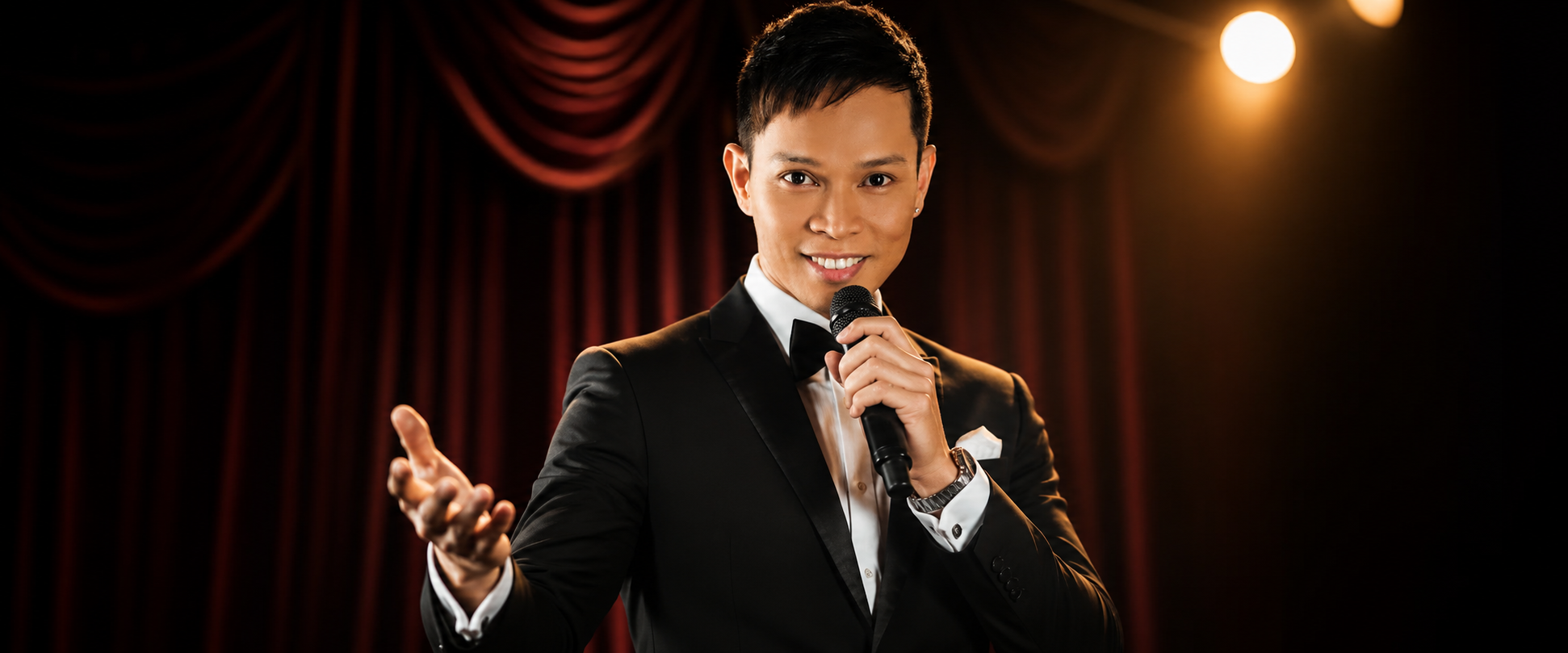
As a performer, I've spent much of my life playing a role.
Whether I was standing on stage with a microphone, hosting a gala dinner or entertaining guests at a celebration, there was always a role to fulfil. It required preparation, professionalism and a commitment to creating the best possible experience for the audience. That role became familiar, comfortable and, over time, almost second nature.
The interesting thing is that we all do something similar.
Not because we're entertainers, but because life asks us to wear different hats every day.
We become the professional at work, the parent at home, the partner in a relationship, the friend who always listens, the person everyone relies upon or the one who appears to have everything under control. Each role carries its own expectations, responsibilities and unwritten rules.
There's nothing unusual about that. In many ways, it's simply part of being human.
The challenge begins when we become so attached to the roles we play that we forget the person behind them.
Over the years, I've met people who were admired by everyone around them. They were respected in their careers, devoted to their families and generous with their time. Yet in quieter moments, away from the expectations of others, they admitted they weren't entirely sure who they were anymore.
Some had spent decades putting everyone else's needs before their own. Others had become so focused on achieving success that they no longer recognised the person staring back at them in the mirror. Their roles had become their identity.
It made me wonder how often we confuse what we do with who we are.
Our careers are roles.
Our titles are roles.
Even confidence can become a role if we're constantly trying to appear stronger than we feel.
As performers, we're taught to step into character when the curtain rises. Eventually the performance ends, the lights go down and we return to ourselves. There's a clear distinction between the role and the person playing it.
Life isn't always so simple.
Many people continue performing long after the audience has disappeared. They smile through difficult days, hide their fears behind busy schedules and convince themselves that asking for help would somehow diminish the image they've worked so hard to create.
It's an exhausting way to live.
One of the greatest privileges of my career has been meeting people both on and off the stage. I've discovered that beneath our different occupations, backgrounds and achievements, we all share something remarkably similar. We all want to be accepted. We all want to be valued. We all want to know that who we are is enough.
Perhaps that's why authenticity feels so refreshing.
When someone speaks honestly, admits they don't have all the answers or allows themselves to be seen without the usual armour, it gives everyone else permission to do the same. Authenticity has a way of cutting through the noise. It reminds us that connection isn't built on perfection; it's built on honesty.
This understanding has become central to my work through Red Carpet Freedom.
People often assume coaching is about becoming a better version of yourself. I see it a little differently. More often than not, it's about rediscovering the person you've always been beneath the expectations, the responsibilities and the roles you've learned to play.
The goal isn't to abandon those roles. We all have responsibilities, and many of them are deeply meaningful. The goal is simply to remember that they are parts of our lives, not the entirety of who we are.
A successful career can be taken away.
Children eventually grow up.
Relationships evolve.
Titles change.
Applause fades.
If our identity depends entirely on those things, life can feel uncertain whenever circumstances shift.
But when our sense of self comes from something deeper—our values, our character and the way we choose to show up in the world—we become far less dependent on external validation.
Looking back, I realise that performing taught me something I never expected.
The most important role I would ever play wasn't the one under the spotlight.
It was learning to become comfortable with the person I was when the lights went out.
Perhaps that's the real work for all of us.
To play our roles well, without allowing them to define us.
To give generously without losing ourselves.
To succeed without believing success is our identity.
And to remember that beneath every title, every achievement and every expectation is simply a human being doing their best.
So I'll leave you with one question.
When the curtain falls...
Who are you when no one is watching?
Brian Lorenz
Performer. Speaker. Presence Coach.
Life is a Stage. Own Yours.
IMAGE GALLERY