The Difference Between Performing and Being Present
By Brian Lorenz
For much of my professional life, I was known as a performer.
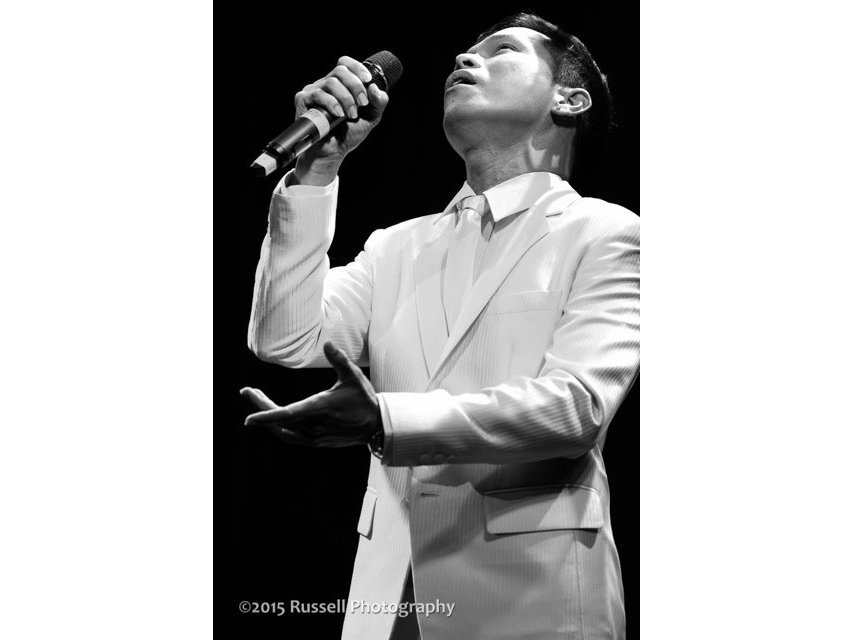
Night after night, event after event, I stepped onto stages with one objective: to create an experience. Whether I was singing, entertaining or hosting as a Master of Ceremonies, the role demanded preparation, professionalism and an awareness of every detail. Success wasn't measured simply by how well I performed, but by how the audience felt when they left.
Looking back, those years taught me far more than how to entertain a crowd. They offered a unique education in people.
Standing on a stage provides a perspective few people experience. You become acutely aware of energy, emotion and connection. You learn to read a room before a word is spoken. You notice who is engaged, who is distracted and who is quietly carrying the weight of something unseen. You begin to recognise that every audience is made up of individuals with their own stories, insecurities and hopes.
The longer I performed, the more I realised that the greatest lessons weren't about performance at all.
They were about presence.
For many years, I assumed the two were closely related. Both involve communication. Both require confidence. Both rely on connecting with people. Yet over time, I came to understand that they are fundamentally different.
Performance is something we do.
Presence is who we are.
Performance is built on preparation, technique and execution. It has its place, and in many professions it is essential. Athletes perform. Musicians perform. Speakers perform. There is nothing inherently wrong with striving for excellence or presenting ourselves professionally.
The difficulty arises when performance extends beyond the stage and becomes the way we live.
Many people spend years performing versions of themselves they believe the world expects to see. They become the dependable employee, the capable leader, the supportive partner or the strong parent. Outwardly, everything appears to be in order. Inwardly, however, there can be a growing sense of exhaustion that comes from constantly trying to meet expectations.
It is a quiet performance that often goes unnoticed.
I've met people who smile while carrying enormous emotional burdens. Others have built successful careers yet privately question their own worth. Some appear confident in every social situation, while living with a persistent fear that one day someone will discover they are not as capable as they seem.
These experiences are far more common than most of us realise.
My years on stage taught me that audiences are remarkably perceptive. They respond to technical ability, but they connect with authenticity. They may admire perfection for a moment, yet they remember honesty long after the performance has ended.
The same principle applies in everyday life.
People are drawn to those who are comfortable in their own skin. Not because they have all the answers, but because they create a sense of trust. Genuine presence has a calming quality. It doesn't compete for attention or rely on outward displays of confidence. It simply allows others to feel seen, heard and accepted.
That understanding has shaped the work I do today.
When people come to me seeking greater confidence, they often believe they need to become someone different. They imagine confidence as another skill to master or another mask to wear. Yet more often than not, our work isn't about creating a new version of themselves. It's about removing the layers that have been covering who they already are.
Presence doesn't ask us to become more impressive.
It asks us to become more authentic.
It invites us to stop measuring ourselves against impossible standards and instead develop the courage to show up honestly, even when life feels uncertain. It reminds us that confidence grows through self-acceptance rather than self-perfection.
In many ways, my career has come full circle.
The stage introduced me to human connection. Coaching has allowed me to explore it more deeply. While the settings have changed, the purpose remains remarkably similar. Whether I'm standing before hundreds of people with a microphone or sitting quietly with one person in conversation, the goal is no longer to deliver a flawless performance.
It is to create a genuine moment of connection.
Perhaps that is the greatest difference between performing and being present.
One is about presenting an image.
The other is about revealing a person.
After all these years, I've come to believe that while performance may capture attention, presence changes lives.
And in the end, that is the role I hope to play—not simply as a performer, but as someone who helps others discover that the most powerful version of themselves has been there all along.
Brian Lorenz
Performer. Speaker. Presence Coach.
Life is a Stage. Own Yours.
IMAGE GALLERY